
Wordyard

Hand-forged posts since 2002

Archives

About

Greatest hits

Archives for February 2016

“People write differently when they’re writing directly to me”

February 9, 2016 by Scott Rosenberg

Josh Marshall (photo by JD Lasica)

Josh Marshall explains why there are no comments on the main “editor’s blog” at his site, Talking Points Memo — he prefers routing feedback through an email inbox:

People write differently when they’re writing directly to me (or now other staffers at TPM). Sometimes it’s an issue of confidentiality: people are not always free to speak publicly, even from an anonymous commenting account. But it is more a matter of how people write, what they say, when they’re writing directly and corresponding with the person who runs the site, when they’re talking to a person who at some level they know. Whatever the reasons, it’s different. And I know this from deep experience.

He’s right. I learned this lesson when I manned Salon’s inbox for the first months of its existence. The response in 1995-96, when email was a total novelty and corporate impersonality the mainstream norm, was incredulity, and then delight. Wait — you mean the editors actually read this stuff? And respond?
Filed Under: Links, Project

The “factory farming” of confessional writing

February 8, 2016 by Scott Rosenberg

bustle_questionnaire

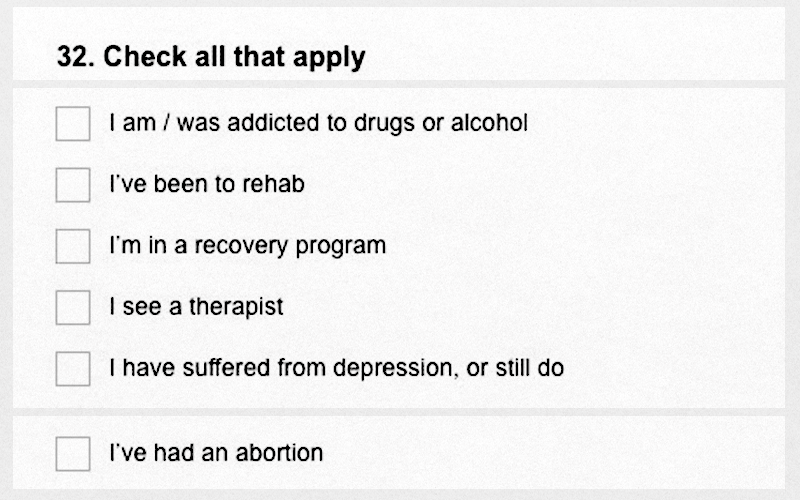
Rich Juzwiak in Gawker on the questionnaire staff writers at Bustle fill out to determine whether they have personal stories that would make good copy:

The market rewards personal storytelling with attention — the more lurid and specific, the better. Just a few weeks ago, we saw a young xoJane writer seemingly pushed to the brink by what she perceived to be the demands of her job and her reluctance to reveal. Nora Ephron’s signature mantra “everything is copy” has become the norm, except everything can’t ever be enough when your job is to churn out posts on a routine basis.

What this survey looks like to me is a crystallization of the industrialization of confession. It’s an efficient, logical method for testing how much of their guts writers want to spill, and which guts exactly. It was probably inevitable that something like this would be invented, even if it didn’t come from a company whose entire genesis reportedly derived from a rather cynically deterministic view of what women want to read about. Its depressing inevitability resembles that of factory farming…

Filed Under: Links, Project

“Mr. Wilson has stuck with a decidedly old-fashioned approach”

February 7, 2016 by Scott Rosenberg

We think of the digital world as a playground for con artists and shape-shifters, but they don’t require computers to do their thing, and never have. From “The Lives and Lies of a Professional Impostor,” by James C. McKinley Jr. and Rick Rojas in the New York Times:

Investigators say Mr. Wilson is a professional impostor and a skilled forger. Though fraud has become an increasingly invisible offense in a digital world, Mr. Wilson has stuck with a decidedly old-fashioned approach, stealing checks and creating new personas, occasionally with accents and falsified papers, the police said.

He has portrayed himself as a Scottish-born D.J., a Cambridge-trained thespian, a Special Forces officer and a professor at M.I.T. He has posed as executives from Microsoft, British Airways and Apple, always with a military background. He pretended to be a soldier seeking asylum in Canada to escape anti-Semitic attacks in the United States. He once maintained an Irish accent so well and for so long that his cellmate in an Indiana jail was convinced that he was an Irish mobster….

Tattooed across his fingers in green ink is a Gaelic phrase, “Mair Fior.” He says it means “Stay True.”

Filed Under: Links, Project

“We’ve lost control of our own stories online”

February 5, 2016 by Scott Rosenberg

Facebook on this day
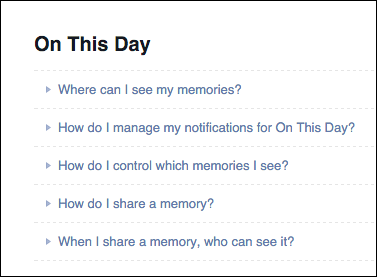
What Facebook’s On This Day shows about the fragility of our online lives — Leigh Alexander in the Guardian:

In many senses, we’ve lost control of our own stories online — the ongoing “right to be forgotten” discussions that began in the European Court of Justice in 2014 act as a partial concession to that point.

Instead of a shoebox of pictures and a diary, your child will grow up depending on interconnected platforms and services. Her entire history, from the first ultrasound picture you share to your network to the day she has a headache to the day she makes a snack, and on like that, will be documented — and could belong to service providers. Unless we can regain control of our narratives online, unless we can discover a way to value our social content, thisflickering constellation of forgettable “moments” and social media “memories”, is the main way our histories will be kept.

Filed Under: Links, Project

Teens opt out of online “public square”

February 4, 2016 by Scott Rosenberg

Felicity Duncan writes in The Conversation:

Teens engage in complex management of their self-presentation in online spaces; for many college students, platforms like Snapchat, that promise ephemerality, are a welcome break from the need to police their online image.

Increasingly, young people are being warned that future employers, college admissions departments and even banks will use their social media profiles to form assessments. In response, many of them seem to be using social media more strategically. For example, a number of my students create multiple profiles on sites like Twitter, under various names. They carefully curate the content they post on their public profiles on Facebook or LinkedIn, and save their real, private selves for other platforms.

This dynamic has been underway for some time. Of course, Facebook and Twitter each began as new ways for us to connect “authentically” with each other on the Internet of a decade ago, which some users felt had grown impersonal and become overrun by ads. These services won us over with their personalizations and intimacies; then, in the quest for revenue and growth, they became polluted public spaces themselves. So the cycle turns again.

Filed Under: Links, Project

“I take them as my unpaid bodyguards and let them do battle out there for me”

February 3, 2016 by Scott Rosenberg

9471165901_6c8b9c0b86_o

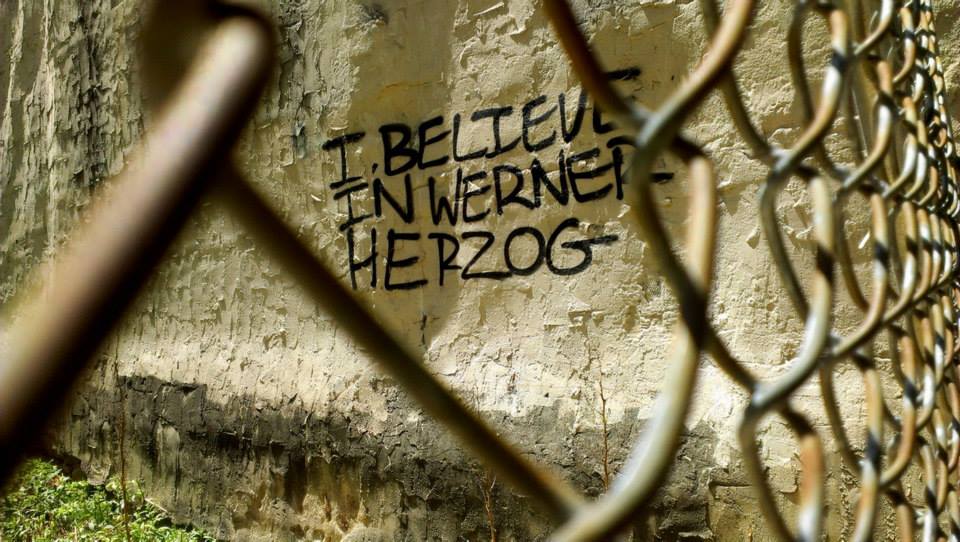
From a Vanity Fair interview with Werner Herzog on the release of his new documentary about the Internet:

Herzog has similarly kept himself removed from the Web, only using it for e-mail and Google Maps directions. As for those convincing Werner Herzog Twitter accounts?

“Oh, that’s all fake,” he says. “Voice impersonators too. And Facebook accounts, you just name it. I have at least 35 or more doppelgängers out there. The Internet is full with them. And that is fine. I take them as my unpaid bodyguards and let them do battle out there for me. It’s funny because there are Werner Herzogs out there who answer questions about filmmaking and do all sorts of funny things like create films I’ve never heard of. There’s a new form of public life, which we have to adapt to.”

Filed Under: Project

How Donald Trump is like a podcast

February 2, 2016 by Scott Rosenberg

In Medium, Matt Haughey puts his finger on the peculiar intimacy Trump conjures with his listeners — a skill he shares with that other performer-turned-pol, Ronald Reagan:

When you see Trump speaking at his stops, he’s clearly talking off the top of his head, and that can be refreshing when compared other political candidates that go off prepared remarks. Politics tackles big important problems that require research, so remarks are usually prepared well in advance. I came away from watching Trump realizing he’s the next phase of George W. Bush, who famously spoke in simple terms that when analyzed for grammar showed up as 8th grade level (most political speeches are at 11th-12th grade level). Everyone watching can understand every word and every sentence, even though what he says usually doesn’t have any specific steps or concrete information on how he’d combat problems.

In these venues Trump is clearly a guy talking off the top of his head, telling you what he really thinks, and it really did feel like he was “not like all the other guys” as he would describe it. People like that for the same reason they liked George W. Bush who I often heard described as “a guy you’d like to have a beer with.”

Trump talking at one of his events is like listening to a podcast, and people might like him for all the same reasons they’d like podcasts. There’s a combo of informality and intimacy that makes you feel like this one person is talking to just you, and telling you amazing things.

Filed Under: Project

“Other people will create the standards defining our emotional lives”

February 1, 2016 by Scott Rosenberg

John C. Havens in Mashable:

In the near future, multiple devices equipped with facial, vocal and biometric sensors utilizing affective computing will be competing to analyze and influence our feelings… Soon you won’t need to prompt Siri, but simply respond when “she” says, “Your expression seems sad — should I download Trainwreck from iTunes?”

This Internet of Emotions has no ethical standards. While manufacturers’ intentions may be positive, how can people tell? And who decides what “positive” even means? Unless we control our identities other people will create the standards defining our emotional lives….

By definition the benefits of emotional intelligence don’t apply to autonomous devices since they don’t genuinely experience feelings. What they’re great at is recognizing our micro-expressions and then emulating empathy to generate a positive response from us.

Filed Under: Project

« Previous Page