You are viewing an old revision of this post, from February 5, 2016 @ 10:22:51. See below for differences between this version and the current revision.
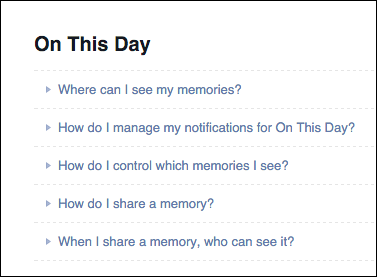
What Facebook’s On This Day shows about the fragility of our online lives — Leigh Alexander in the Guardian:
In many senses, we’ve lost control of our own stories online — the ongoing “right to be forgotten” discussions that began in the European Court of Justice in 2014 act as a partial concession to that point.
Instead of a shoebox of pictures and a diary, your child will grow up depending on interconnected platforms and services. Her entire history, from the first ultrasound picture you share to your network to the day she has a headache to the day she makes a snack, and on like that, will be documented — and could belong to service providers. Unless we can regain control of our narratives online, unless we can discover a way to value our social content, thisflickering constellation of forgettable “moments” and social media “memories”, is the main way our histories will be kept.
Post Revisions:
- February 5, 2016 @ 10:24:10 [Current Revision] by Scott Rosenberg
- February 5, 2016 @ 10:24:10 by Scott Rosenberg
- February 5, 2016 @ 10:22:51 by Scott Rosenberg
Changes:
| February 5, 2016 @ 10:22:51 | Current Revision | ||
|---|---|---|---|
| Content | |||
| Unchanged: <img src="http://www.wordyard.com/ wp-content/uploads/2016/02/ Screenshot-2016- 02-05-10.19.18.png" alt="Facebook on this day " width="377" height="277" class="aligncenter size-full wp-image-6656" /> | Unchanged: <img src="http://www.wordyard.com/ wp-content/uploads/2016/02/ Screenshot-2016- 02-05-10.19.18.png" alt="Facebook on this day " width="377" height="277" class="aligncenter size-full wp-image-6656" /> | ||
| Deleted: <a href=" | Added: <a href="http:// www.theguardian.com/technology/ 2016/jan/25/facebook-on-this- day-tweets-status- updates">What Facebook's On This Day shows about the fragility of our online lives</a> -- Leigh Alexander in the Guardian: | ||
| Unchanged: <blockquote>In many senses, we've lost control of our own stories online -- the ongoing "right to be forgotten" discussions that began in the European Court of Justice in 2014 act as a partial concession to that point. | Unchanged: <blockquote>In many senses, we've lost control of our own stories online -- the ongoing "right to be forgotten" discussions that began in the European Court of Justice in 2014 act as a partial concession to that point. | ||
| Unchanged: Instead of a shoebox of pictures and a diary, your child will grow up depending on interconnected platforms and services. Her entire history, from the first ultrasound picture you share to your network to the day she has a headache to the day she makes a snack, and on like that, will be documented -- and could belong to service providers. Unless we can regain control of our narratives online, unless we can discover a way to value our social content, thisflickering constellation of forgettable "moments" and social media "memories", is the main way our histories will be kept.</blockquote> | Unchanged: Instead of a shoebox of pictures and a diary, your child will grow up depending on interconnected platforms and services. Her entire history, from the first ultrasound picture you share to your network to the day she has a headache to the day she makes a snack, and on like that, will be documented -- and could belong to service providers. Unless we can regain control of our narratives online, unless we can discover a way to value our social content, thisflickering constellation of forgettable "moments" and social media "memories", is the main way our histories will be kept.</blockquote> | ||
Note: Spaces may be added to comparison text to allow better line wrapping.